If you plan to stay in your own home as you get older, the bathroom deserves more attention than any other room. It combines wet floors, hard surfaces, and awkward movements like standing up from a low seat, which is exactly the mix that leads to falls.
None of the fixes here require a full renovation. Most can be added to a bathroom that already exists, and they make a real difference in how safe and how comfortable the room feels every single day.
Grab Bars Done Right
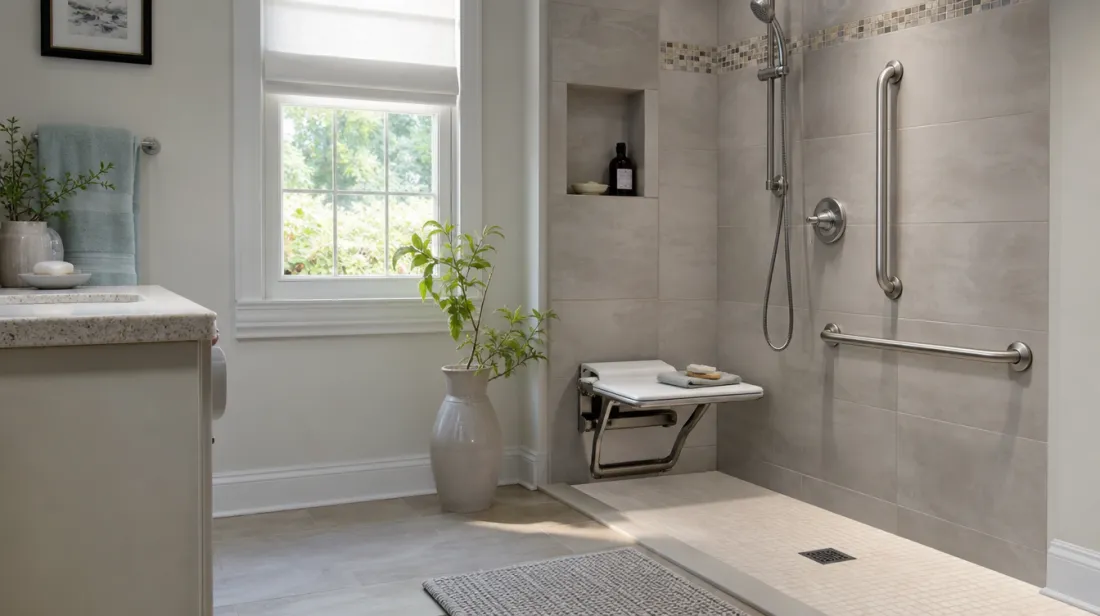
A grab bar only works if it can actually hold your weight. That means it needs to be screwed into a wall stud or installed with proper anchors rated for the weight, never a suction cup version that can pull loose exactly when you need it most.
Placement matters. A grab bar near the toilet and one or two inside the shower or tub cover the two spots where people most often need something solid to hold onto.
If you are not confident installing one yourself, this is a job worth hiring out. A bar that is not properly anchored can give a false sense of security that is worse than having no bar at all.
Making the Toilet Easier
A standard toilet sits lower than many older adults find comfortable, which makes standing up harder on tired knees or a sore hip. A raised toilet seat, or a toilet safety frame that adds handles on either side, can make that motion much easier.
Both options are simple to add without changing the plumbing or the room itself.
Making the Shower Safer
A shower chair takes the standing out of showering entirely, which removes a lot of the risk in one step. Paired with a handheld shower head, it also makes rinsing off far easier while seated.
Non-slip mats matter both inside the tub or shower and on the floor just outside it, since stepping out onto a wet floor is one of the more common moments a fall happens.
If a full renovation is ever on the table, a low threshold or walk-in shower removes the step over a tub wall entirely, which is one of the harder movements for many people as they age.
Small Fixtures That Add Up
Lever handles are easier to operate than round knobs, especially for hands with arthritis or reduced grip strength. They are a small swap that makes a daily difference every time the water gets turned on.
Setting your water heater to 120 degrees Fahrenheit helps prevent scalds, since skin can burn faster at higher temperatures and older skin is often more sensitive to heat. This is a simple adjustment most water heaters allow without a service call.
A Checklist to Work Through
- Grab bars near the toilet and inside the shower, anchored into a stud
- A raised toilet seat or a toilet safety frame
- A shower chair and a handheld shower head
- Non-slip mats in the shower or tub and on the floor outside it
- Lever handles in place of round knobs
- Water heater set to 120 degrees Fahrenheit
Getting a Second Opinion
You do not have to figure all of this out on your own. An occupational therapist can do a home safety check and point out specific risks in your own bathroom that a general checklist like this one might miss.
Many of these professionals specialize in exactly this kind of visit, and the changes they suggest are often smaller and less expensive than people expect. A short visit now can prevent a much longer recovery later.