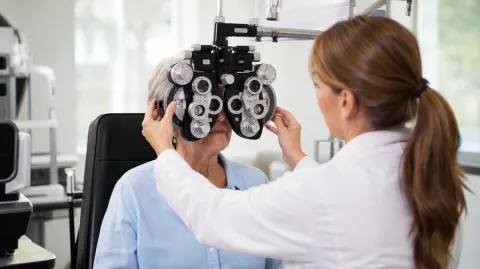
Eyes change with age in ways that have nothing to do with how healthy you are otherwise. Older eyes need more light to see the same detail a younger eye sees easily, and they are more bothered by glare, the harsh bright spot from a bare bulb or a sunlit window.
Most homes were lit years ago, for the people living in them at the time. If nothing has changed since, the lighting in your home may no longer match what your eyes actually need now.
The fix is not lighting the whole house like a stadium. It is paying closer attention to a few specific spots where poor light causes the most trouble.
Stairs
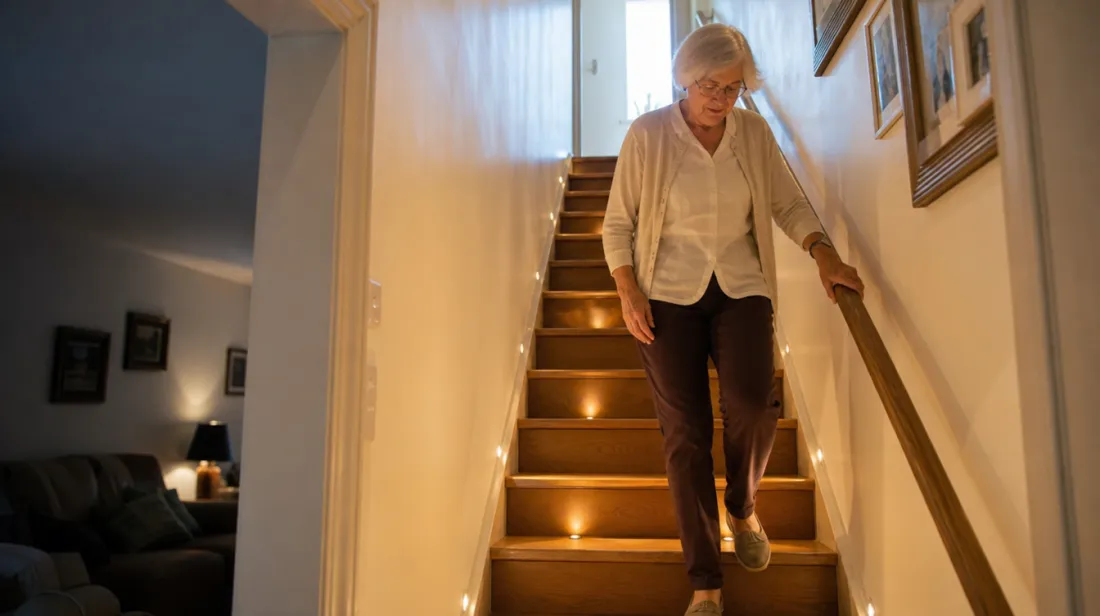
Stairs are one of the most important places to get lighting right, since a shadow can hide the edge of a step just enough to cause a stumble. Light switches at both the top and the bottom mean you never have to walk down or up in the dark to reach one.
Even, bright light across the whole staircase matters more than one strong bulb at either end, since a dim patch in the middle can be just as much of a hazard as no light at all.
The Path from Bed to Bathroom
A trip to the bathroom in the middle of the night is one of the more common times a fall happens, mostly because it happens in near total darkness. A night light along that path, or a motion sensor light that switches on as you walk, solves this without you having to remember to do anything.
This is a small, inexpensive fix that covers one of the higher risk moments in a typical night.
The Kitchen Counter
Reading a label, checking whether food is fully cooked, or using a knife safely all depend on good light exactly where your hands are working. Overhead light alone often leaves a shadow over the counter, cast by your own body as you stand at it.
Adding light directly over or under the cabinets, aimed at the counter itself, closes that gap in a way ceiling light on its own usually cannot.
Entryways and Outdoor Steps
Fumbling for keys in the dark on an uneven step is asking for a fall before you have even gotten inside. A bright light at the front door and along any outdoor steps helps you see exactly where you are stepping before your foot lands there.
Motion sensor lights work especially well outdoors, since they turn on automatically as you approach and do not require you to find a switch in the dark first.
Choosing the Right Light
- Choose brighter bulbs, measured in lumens rather than watts, in rooms where you read, cook, or handle anything detailed
- Look for even light across a room rather than one strong bulb in a single corner
- Use shades or diffusers to soften harsh, direct light and cut down on glare
- Add night lights or motion sensor lights along paths used after dark
None of these changes require an electrician for most homes. Plug-in night lights, motion sensor bulbs that screw into an existing fixture, and swapping in a brighter bulb are all things most people can do themselves in a single afternoon.
Light You Will Actually Notice
Good lighting is easy to take for granted until you are standing in a dim hallway trying to find a switch, or squinting at a stove dial you cannot quite read. Fixing a handful of specific spots, the stairs, the path to the bathroom, the counter, the entryway, covers most of the real risk without redoing your whole house.
If your eyes seem to need noticeably more light than they used to, or bright light bothers you more than it once did, it is worth mentioning at your next eye exam.