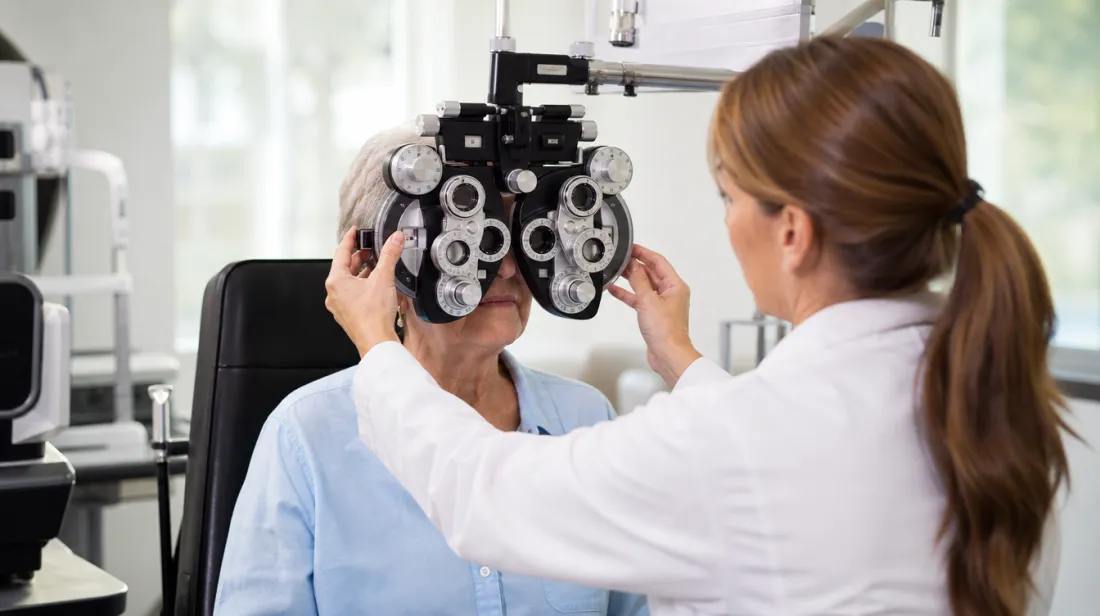
Your eye doctor is doing more than checking whether you need a new glasses prescription. After 60, that exam is looking for damage that can start long before you notice anything wrong.
Some of the biggest threats to your eyesight cause no pain and no early warning signs. That is exactly why the exam matters, even on days when your eyes feel fine.
When the doctor puts drops in your eyes and the light suddenly feels too bright, that is not a side detail. Dilation widens your pupil so the doctor can see the retina and optic nerve at the back of your eye, where a lot of early damage simply cannot be seen without it.
Checking the Pressure Inside Your Eye
One test measures the pressure inside your eye. High pressure over time can slowly damage the optic nerve, the cable that carries what you see to your brain.
This condition is called glaucoma. It is sneaky, because it usually causes no pain and no noticeable vision loss until real damage has already happened, which is why the doctor checks the nerve directly at every visit.
Looking for Clouding in the Lens
The doctor also checks the lens inside your eye for clouding, called a cataract. Cataracts usually build up slowly, over years, so you may not notice how much dimmer your vision has gotten until it is measured against a healthy lens.
Colors can look faded. Halos can show up around headlights at night. Reading can start to feel like more work than it used to.
Checking the Retina for Age-Related Changes
The macula is the small, central part of the retina that gives you sharp detail, the kind you use for reading and recognizing a face across the room. The doctor examines that area for the early signs of age-related macular degeneration.
Those signs can show up well before you would notice any blur or distortion on your own. That is why this part of the exam does not wait for a symptom.
Checking for Diabetic Eye Damage
If you have diabetes, high blood sugar over time can damage the tiny blood vessels in the retina. This is called diabetic eye disease.
Like glaucoma, it often causes no early symptoms you would notice at home. The dilated exam lets the doctor look directly at those blood vessels for leaking or swelling, often before your vision changes at all.
How Often to Go, and When Not to Wait
The American Academy of Ophthalmology advises a full eye exam every one to two years starting at 65. Your own doctor may suggest a different schedule if they see something at your exam worth watching sooner, or if you have diabetes or another condition that affects your eyes.
A few signs mean you should not wait for your next scheduled visit:
- Sudden loss of vision, even in just part of one eye
- A sudden shower of new floaters or flashes of light
- What feels like a curtain or shadow moving across part of your vision
Any of these means call your eye doctor right away, or go to the emergency room if you cannot reach them.
What to Bring to Your Next Visit
Bring a list of your medicines, including anything you take over the counter. Some drugs can affect your eyes or change how the doctor reads certain tests.
Mention any family history of glaucoma or macular degeneration, since both can run in families. And mention anything you have noticed yourself, even something small, because you are the one who lives behind those eyes every day.