Your eyes feel scratchy by afternoon, tired by evening, and sometimes blurry for a few seconds after you blink. If that sounds familiar, you are far from alone, and there is usually a simple explanation.
Dry, tired eyes are one of the most common complaints people bring to their eye doctor after 60, and most of the time the cause is something you can actually do something about.
None of this means something is wrong with you specifically. It is simply what tends to happen to eyes as the years add up, especially eyes that spend hours a day looking at a screen.
Why Your Eyes Dry Out More Now
Tear production naturally slows down with age for a lot of people, so your eyes have less of a protective film to work with than they once did. That makes them more sensitive to anything that pulls moisture away. This is a normal part of getting older, not a sign that something specific has gone wrong.
Dry indoor air from heating or air conditioning, wind, and certain medicines, including some for allergies, blood pressure, or depression, can all make dryness worse. If you take any of these regularly, dryness may be a side effect worth mentioning to your doctor or pharmacist rather than something to just live with.
The Screen Connection
When you focus on a screen, whether it is a phone, a computer, or a television, you blink far less often than normal. Fewer blinks means less of the tear film gets spread across your eye, and that is when the scratchy, tired feeling tends to set in.
This is where the 20-20-20 habit helps. Every 20 minutes, look at something about 20 feet away for at least 20 seconds, so your eyes get a real break and a chance to blink normally again. It is easy to forget in the middle of reading or scrolling, so some people set a quiet reminder on their phone until it becomes routine.
Simple Habits That Help
A few small changes make a real difference for a lot of people:
- Use a humidifier in rooms where you spend a lot of time, especially in dry winter air
- Take screen breaks using the 20-20-20 habit throughout the day
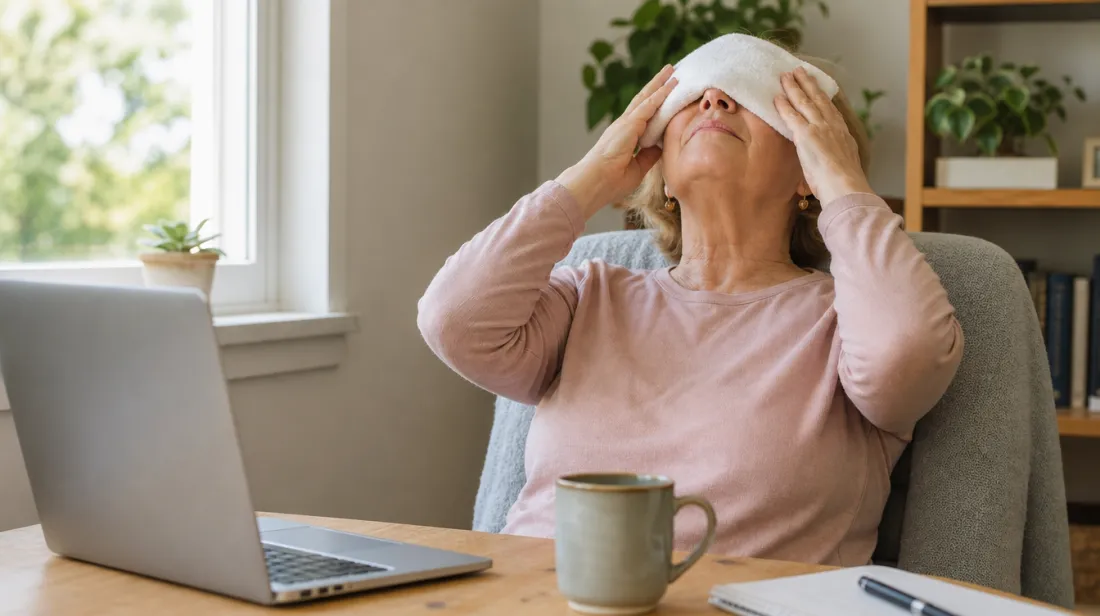
- Try a warm compress, a clean washcloth run under warm water, held gently over closed eyes for a few minutes
- Blink fully and deliberately every so often, especially while reading or looking at a screen
None of these require special equipment or a big change to your day.
What to Know About Eye Drops
Over-the-counter lubricating eye drops can ease dryness for many people and are widely available at any pharmacy. There are different types, so it can help to ask your eye doctor or pharmacist which kind fits your situation, since eyes and their needs vary.
If you find yourself using drops many times a day just to get through it, that is worth mentioning at your next eye exam rather than just buying a bigger bottle. A pharmacist behind the counter can also be a quick, easy first stop if you are not sure where to start.
When to Call Your Eye Doctor
Ordinary dryness is common and usually manageable with the steps above. Pain, unusual sensitivity to light, or any change in your vision are different, and mean you should call your eye doctor rather than wait it out.
Giving Your Eyes a Fair Chance
Dry, tired eyes are rarely a sign of anything serious, but they are also not something you have to just accept as part of getting older. A humidifier, a few screen breaks, and the right drops solve this for a lot of people.
If you have tried the basics and your eyes still feel tired and dry more days than not, bring it up at your next visit. It is a fixable problem more often than people expect, and your eye doctor has seen it many times before.