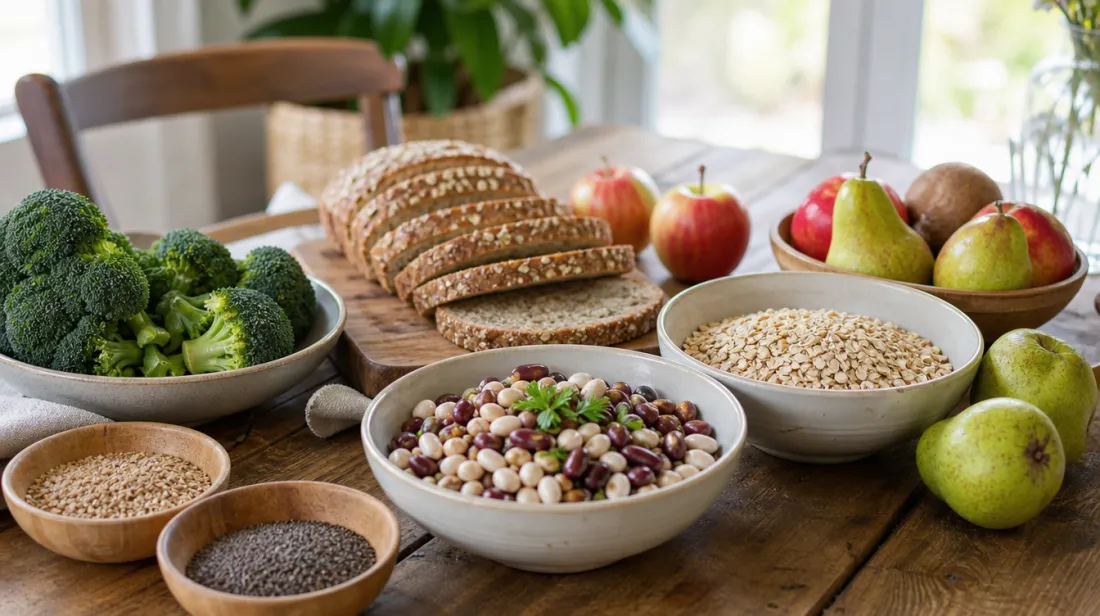
Fiber is one of those things we know we should eat more of, yet most of us do not think much about it until digestion becomes uncomfortable. That is a shame, because fiber quietly supports far more than regularity.
The US Dietary Guidelines set a daily fiber target of about 22 grams for women and 28 grams for men over 50. Most Americans get less than that, often far less, without ever seeing the gap on paper.
The good news is that closing that gap does not require a special diet or a trip to a specialty store. A handful of everyday foods, added a little at a time, can make a real difference.
What Fiber Actually Does
Fiber keeps digestion moving in a regular, comfortable way, which matters more as the digestive system slows down with age. It also helps steady blood sugar after meals, since fiber slows down how quickly sugar from food enters the bloodstream.
Fiber feeds the healthy bacteria that live in your gut, and a healthy gut is linked with better digestion overall. Foods high in fiber also tend to be more filling, which can help with maintaining a comfortable weight.
Where to Find It
You do not need to buy anything unusual. Fiber is already in many foods most people eat regularly, just not always in the amount that adds up.
- Beans and lentils, some of the most concentrated everyday sources of fiber
- Oats and other whole grains, in place of refined white bread or white rice
- Fruit eaten with the skin on, like an apple or a pear, rather than peeled or juiced
- Vegetables, especially when eaten raw or lightly cooked rather than boiled soft
- Nuts, a small handful adding fiber along with healthy fat
Swapping white bread for whole grain bread, or white rice for brown rice, is one of the easiest changes to make since it requires no new shopping habits, just a different aisle.
Add It Slowly
This is the part people often get wrong. Jumping from a low fiber diet to a high fiber one overnight can cause bloating and discomfort, which is enough to make anyone give up on the idea entirely.
Add fiber gradually instead, over a couple of weeks rather than a couple of days. Try one extra serving of beans or one piece of whole fruit a day for a week, then add another change the following week.
Water matters just as much as the fiber itself. Drink enough water alongside the fiber you add, since fiber needs water to do its job well in the digestive system. Without enough fluid, more fiber can actually make things feel worse rather than better.
A Simple Day of Better Fiber
You do not need to track grams to eat more fiber. A day built around a few simple choices gets you most of the way there. Oatmeal with berries at breakfast, a bean based soup or a salad with beans at lunch, and a dinner plate with a vegetable and a side of brown rice or a whole grain roll covers a lot of ground.
Snacking on a piece of fruit or a small handful of nuts instead of packaged crackers adds a bit more without any real effort.
Making the Habit Last
Fiber is not a fix you notice overnight the way a new pair of glasses is. It works quietly, over weeks, as your digestion settles into a steadier rhythm and your blood sugar responds a little more evenly after meals.
Pick one swap this week, whether that is beans in your lunch or fruit with the skin on, and let it become normal before adding the next one. Small, steady changes are what actually stick, far more than an ambitious new plan abandoned after a few days.
If digestion changes suddenly or fiber does not seem to help after a few weeks of real effort, that is worth mentioning to your doctor.