Most recipes are written for four people. Most produce comes in bags sized for a family. If you are cooking for one, that mismatch means food going bad in the fridge more often than you would like, and money going in the trash along with it.
This is not a failure of planning on your part. The whole system, from recipe cards to grocery store packaging, was not built with one person in mind. A few adjustments can close that gap without turning cooking into a chore.
The goal is not to cook less. It is to cook in a way that matches how much one person actually eats, and let the freezer do some of the work the rest of the week.
Plan a Few Meals, Not Just One
Before you shop, think through three or four meals you actually want to eat that week rather than shopping meal by meal. This lets you buy just enough of each ingredient instead of a large bag you will only use a third of.
Look for smaller package sizes when the store offers them. Many stores now sell smaller portions of produce, meat, and bread specifically because so many shoppers live and cook alone.
When a recipe only comes in a larger size, like a bag of onions or a bunch of celery, plan a second use for it in the same week rather than letting the rest sit forgotten in the crisper drawer.
Cook Once, Eat Twice
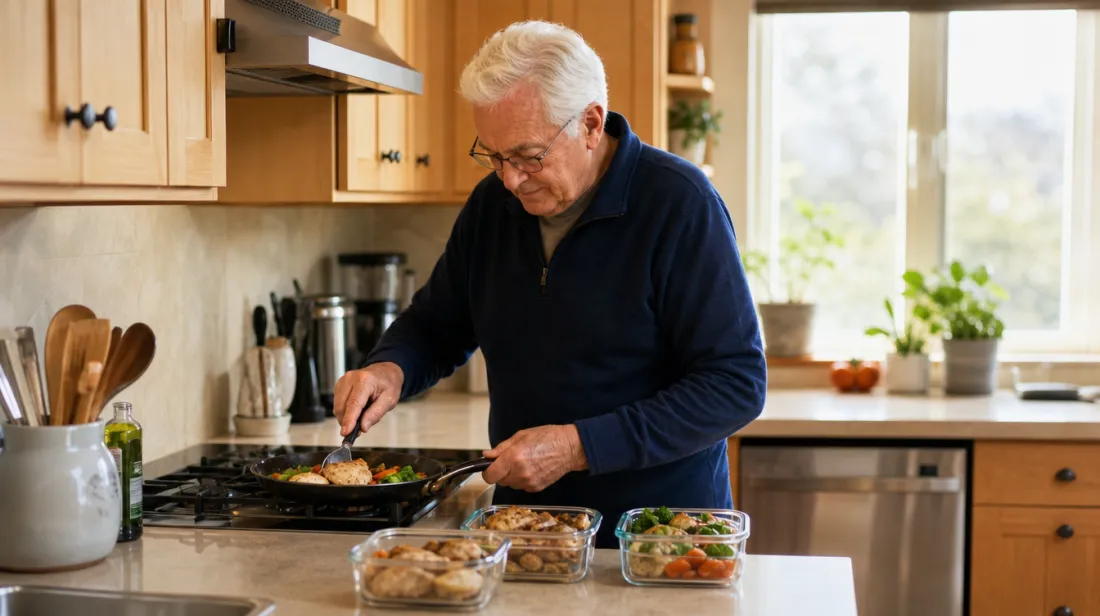
One of the simplest habits for cooking alone is making a bigger batch of one dish on purpose, then eating it again later in the week or freezing part of it. A pot of soup, a tray of roasted vegetables, or a pan of chicken thighs all hold up well for a second meal.
This cuts the number of times you actually have to cook without leaving you eating the exact same plate every single night, since a base dish can be dressed differently the second time around.
Let the Freezer Carry the Extra
The freezer is probably the most underused tool in a one person kitchen. Cooked portions, extra bread, and even fresh vegetables close to their limit can all be frozen instead of thrown away.
- Freeze in single portions so you can pull out exactly what you need
- Label and date every container, since it is easy to forget what is in an unmarked bag a month later
- Freeze bread you will not finish in time rather than watching it go stale on the counter
- Freeze fruit that is getting too soft to eat fresh for use in oatmeal or a smoothie later
A few minutes spent labeling containers when you put them away saves real guesswork later, especially once the freezer has more than one mystery bag in it.
Know How Long Leftovers Actually Last
According to USDA guidance, most cooked leftovers are safe in the refrigerator for three to four days. After that, it is time to either eat them or freeze them, not leave them for another day and hope.
Writing the date on the container when you put it in the fridge takes a few seconds and removes the guesswork of trying to remember whether something has been sitting there for two days or six.
If you are ever unsure whether a leftover has gone past that window, when in doubt, it is safer to throw it out than to risk it.
A Kitchen That Works for One
Cooking for one does not have to mean eating the same small handful of dishes over and over, or watching food spoil before you get to it. A little planning before the store, a batch of something cooked with a second meal in mind, and a freezer you actually use as a tool rather than a forgotten box can change the whole rhythm of your week.
None of this requires new equipment or a big change in how you cook. It is mostly about matching the amount of food coming into your kitchen to the one person who is going to eat it, and giving yourself an easy way to hang onto the extra instead of losing it.