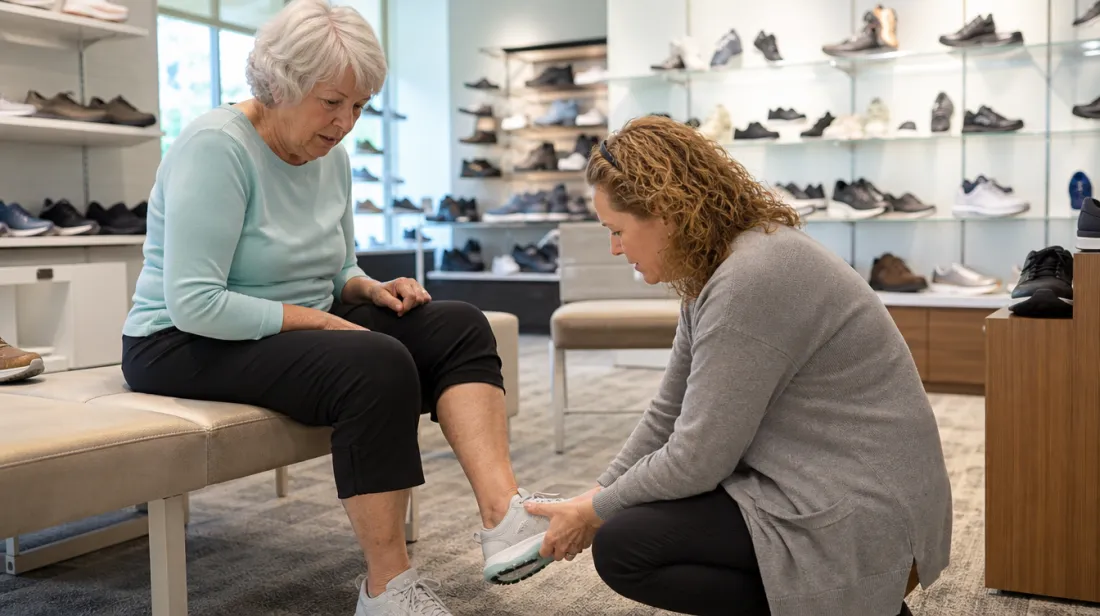
Your feet at 65 are not quite the feet you had at 35. They tend to spread a little, flatten a little, and become less forgiving of a shoe that does not fit quite right.
A shoe that rubs, slips, or does not bend where your foot bends can affect more than comfort. It can affect your balance and your confidence on a walk.
Shop Later in the Day
Feet swell a little over the course of a normal day, so shoes that feel fine in the morning can feel tight by afternoon. Shopping for walking shoes in the afternoon or evening, when your feet are at their largest, gives you a more honest fit.
Trying shoes on first thing in the morning is one of the most common reasons people end up with a pair that feels too small once they have been on their feet a while.
Check the Fit the Right Way
With the shoe on and laced, you should have about a thumb's width of space between your longest toe and the front of the shoe. Any less than that, and your toes are likely to hit the front on every step, especially walking downhill.
Look for a roomy toe box, the part of the shoe that surrounds your toes. Toes need room to spread naturally as you walk, and a narrow toe box can pinch or rub over time.
What a Good Walking Shoe Has
A few features matter more for walking comfort and safety than anything about the shoe's looks.
- A firm heel that holds your heel steady rather than collapsing to the side
- Enough cushioning to absorb the impact of each step
- A sole that bends at the ball of the foot, near your toes, rather than in the middle of the shoe
- A non slip sole with good grip, especially useful on smooth floors or wet pavement
Bend the shoe in your hands before buying it. If it folds easily in the middle rather than near the toes, it will not support your foot the way it should while walking.
Bring What You Actually Wear
Bring the socks you normally wear on walks, and any shoe inserts or orthotics your doctor or podiatrist has given you. Trying shoes on with the wrong socks, or without your usual insert, can throw off the fit you end up buying.
Know When to Replace Them
Walking shoes wear out even when they still look fine on the outside. The cushioning inside breaks down with use, and a shoe that has lost its cushioning no longer protects your joints the way a newer one does.
If the tread looks flattened, if the shoe feels less supportive than it used to, or if you cannot remember when you bought it, it is probably time for a new pair.
A Note for Anyone With Diabetes
If you have diabetes, foot care deserves extra attention. Check your feet daily for any redness, cuts, or blisters you might not otherwise feel, and ask your doctor about what proper footwear looks like for your specific situation.
A shoe that seems like a minor irritation to most people can become a more serious problem for a foot with reduced feeling or slower healing.
The Right Fit Is Worth the Trip
Good walking shoes are not about brand names or price tags. They are about fit, support in the right places, and a sole that bends where your foot bends.
Taking the extra time to shop later in the day, check the fit properly, and bring your usual socks and inserts pays off every single time you put the shoes on afterward.