A home blood pressure reading can be thrown off by things that have nothing to do with your actual blood pressure: a full cup of coffee, crossed legs, or a cuff over your sleeve. A few small habits make the number you get much more trustworthy.
Here is the routine the American Heart Association recommends, broken into steps you can actually follow at home. None of these steps takes long, and together they can be the difference between a number you can trust and one that sends you or your doctor chasing the wrong problem.
Before You Even Pick Up the Cuff
Avoid caffeine, exercise, and smoking for at least 30 minutes before you take a reading. All three can raise your blood pressure temporarily and throw off the number.
Use the bathroom first if you need to. A full bladder can push your reading higher than it really is. It sounds like a small thing, but it is one of the easiest ways a reading gets skewed without anyone noticing.
Sit and Settle for Five Minutes
Sit quietly for five minutes before you start, with your back supported by the chair and your feet flat on the floor. Keep your legs uncrossed.
This part feels like nothing is happening, but it matters. A body that just walked into the room, sat down, and crossed its legs will not give an accurate reading.
Position Your Arm and Cuff Correctly
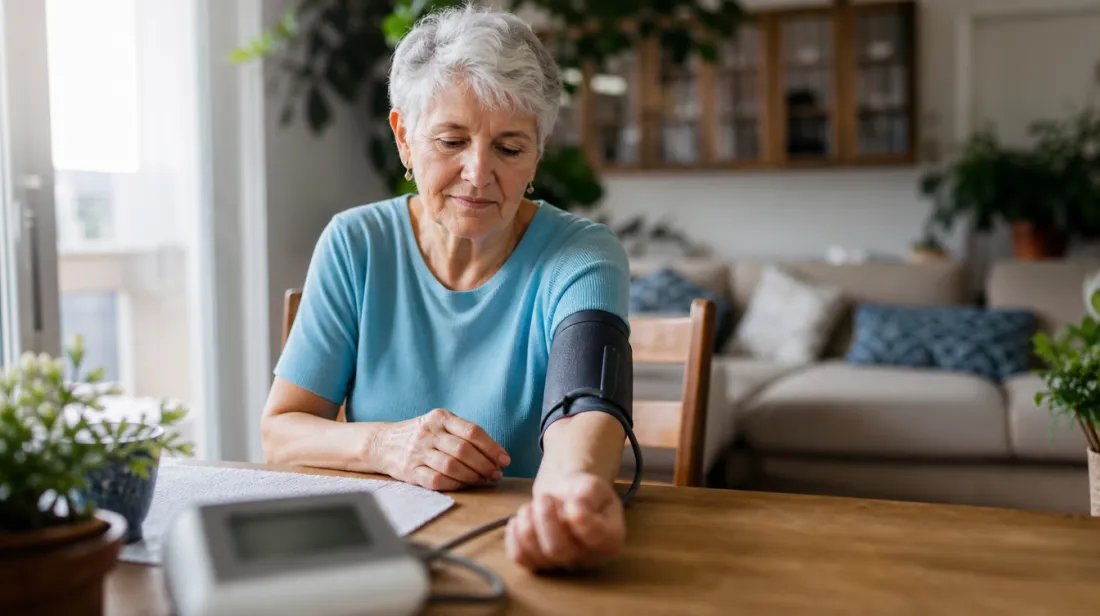
Rest your arm on a table or armrest so the cuff sits roughly at the height of your heart. An arm dangling at your side or held up in the air can change the reading.
Place the cuff directly on bare skin, not over a sleeve, and make sure it is the right size for your arm. A cuff that is too small or too large will not read correctly, no matter how carefully you follow every other step.
Take Two Readings, a Minute Apart
Take one reading, wait about a minute, and take a second reading. Many people find the two numbers differ slightly, and that is normal.
- Sit quietly for 5 minutes first, back supported, feet flat, legs uncrossed
- Rest your arm at heart level with the cuff on bare skin
- Take a reading, wait one minute, then take a second reading
- Write down both numbers along with the time of day
Taking your blood pressure at roughly the same time each day makes it easier to spot real patterns instead of comparing numbers taken under different conditions.
Keep a Written Record
Write your readings down, whether in a small notebook or an app, rather than trying to remember them. A record over days and weeks tells your doctor far more than any single number does.
Bring that record to your next appointment. It gives your doctor the pattern behind the number, which matters more than any one reading taken on its own. A single high reading taken on a rushed morning can look alarming by itself, while the same number sitting inside weeks of steady readings often tells a calmer story.
When a Reading Means Call 911
Most home readings, even high ones, are not an emergency and are worth mentioning to your doctor at a regular visit. But a reading of 180 over 120 or higher, together with chest pain, shortness of breath, weakness, or a sudden change in vision or speech, is different.
That combination means calling 911, not waiting for an appointment. It is the one point in this routine worth remembering above every other step.